






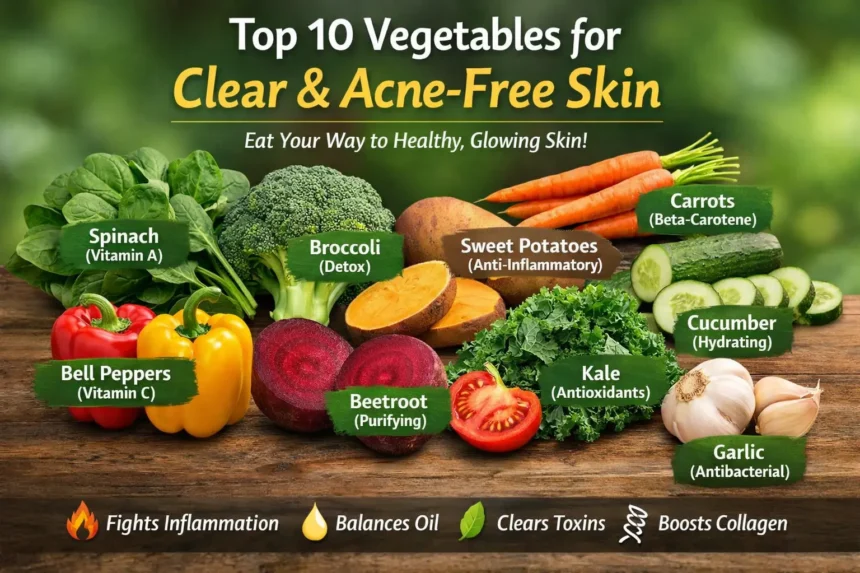
Clear, acne-free skin isn’t just about the products you apply — it’s also about what you eat. Research shows that inflammation, blood sugar spikes, hormonal imbalance, and gut health all play a role in breakouts. The right vegetables can help regulate these factors naturally.
In this guide, we’ll explore the top 10 vegetables for clear skin, how they support acne control, and how to include them in your daily diet for real, visible results.
Why Diet Matters for Acne-Prone Skin
Acne develops due to:
- Excess oil production
- Clogged pores
- Inflammation
- Hormonal fluctuations
- Gut imbalance
Vegetables rich in vitamins A, C, E, zinc, antioxidants, and fiber can:
- Reduce inflammation
- Support detox pathways
- Balance blood sugar
- Improve gut health
- Promote collagen production
Let’s dive into the best options.
1. Spinach – The Skin-Clearing Superfood
Spinach is rich in vitamin A, vitamin C, iron, and antioxidants.
How it helps acne:
- Vitamin A regulates oil production
- Antioxidants reduce inflammation
- Iron improves oxygen delivery to skin
How to eat it: Add to smoothies, salads, or lightly sauté with garlic.
2. Carrots – Natural Vitamin A Boost
Carrots are high in beta-carotene, which converts into vitamin A.
Skin benefits:
- Prevents clogged pores
- Supports skin cell turnover
- Reduces acne scars over time
Eat them raw, juiced, or roasted for maximum benefits.
3. Broccoli – Detox & Hormone Support
Broccoli contains sulforaphane, vitamin C, and fiber.
Why it’s great for acne:
- Supports liver detoxification
- Helps balance estrogen levels
- Fights oxidative stress
Steam lightly to preserve nutrients.
4. Sweet Potatoes – Anti-Inflammatory Power
Sweet potatoes are loaded with beta-carotene and vitamin C.
Benefits:
- Reduces redness and inflammation
- Promotes smoother skin texture
- Supports immune health
Bake or mash for a healthy skin-friendly carb option.
5. Cucumbers – Hydration Hero
Hydrated skin heals faster and produces less excess oil.
Cucumbers are:
- 95% water
- Rich in silica
- Naturally cooling
They help reduce puffiness and calm inflamed acne.
6. Bell Peppers – Vitamin C for Collagen
Red and yellow bell peppers are extremely high in vitamin C.
Skin benefits:
- Boosts collagen production
- Speeds up acne scar healing
- Improves skin brightness
Eat them raw in salads for best nutrient retention.
7. Kale – Nutrient-Dense Acne Fighter
Kale contains:
- Vitamin A
- Vitamin K
- Antioxidants
It supports:
- Skin repair
- Reduced inflammation
- Improved circulation
Blend into green smoothies or add to soups.
8. Beetroot – Blood Purifier for Clear Skin
Beetroot is known for its detoxifying properties.
Why it helps:
- Improves blood circulation
- Supports liver function
- Reduces toxin buildup
You can drink beetroot juice or add it to salads.
9. Tomatoes – Natural Lycopene Protection
Tomatoes are rich in lycopene, a powerful antioxidant.
Benefits:
- Protects against UV damage
- Reduces inflammation
- Improves overall skin tone
Cooked tomatoes increase lycopene absorption.
10. Garlic – Natural Antibacterial Support
Garlic contains allicin, known for antimicrobial effects.
How it helps acne:
- Fights acne-causing bacteria
- Reduces inflammation
- Supports immune system
Consume raw in small amounts or add to cooked meals.
How to Build a Skin-Friendly Plate
For best results:
- Fill 50% of your plate with vegetables
- Combine with healthy fats (olive oil, nuts, seeds)
- Limit refined sugar and processed foods
- Drink enough water daily
- Support gut health with fiber-rich foods
Consistency matters more than quick fixes.
Additional Tips for Acne-Free Skin
While vegetables support skin health, combine them with:
- Proper cleansing routine
- Non-comedogenic skincare
- Adequate sleep
- Stress management
- Balanced hormones
If acne is severe or persistent, consult a qualified dermatologist.
Frequently Asked Questions (People Also Ask Style)
Which vegetable is best for acne?
Vegetables rich in vitamin A like carrots, spinach, and sweet potatoes are highly effective for regulating oil production and preventing clogged pores.
Can eating vegetables clear acne completely?
Diet helps significantly, but acne is multifactorial. Hormones, genetics, and skincare also play important roles.
How long does it take to see results?
With consistent dietary changes, many people notice improvement within 4–8 weeks.
Are raw vegetables better for skin?
Some nutrients are better absorbed raw (like vitamin C), while others (like lycopene in tomatoes) absorb better when cooked.
What should I avoid for acne-prone skin?
Limit high-glycemic foods, sugary drinks, excessive dairy, and processed snacks.
Final Thoughts
Healthy, glowing skin starts from within. By incorporating these top 10 vegetables for clear and acne-free skin, you’re supporting your body’s natural healing processes. Instead of chasing quick fixes, focus on nourishing your skin through balanced nutrition and sustainable habits.