





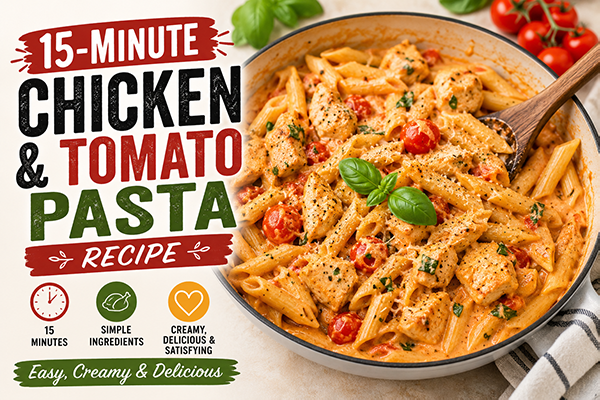
Why You’ll Love This Chicken and Tomato Pasta
There are plenty of reasons to add this creamy chicken tomato pasta to your weeknight dinner rotation.
- Quick and convenient: The pasta and sauce can be prepared at the same time.
- Simple ingredients: Most ingredients are easy to find in a regular grocery store.
- Creamy and flavorful: Tomatoes, cream, Parmesan, garlic, and herbs create a rich but balanced sauce.
- Family-friendly: The mild flavors can easily be adjusted for children or adults.
- Easy to customize: Add vegetables, spice, cheese, or different herbs according to your taste.
- Great for leftovers: Properly stored leftovers can make an easy lunch or second dinner.
- Beginner-friendly: The recipe doesn’t require complicated cooking techniques.
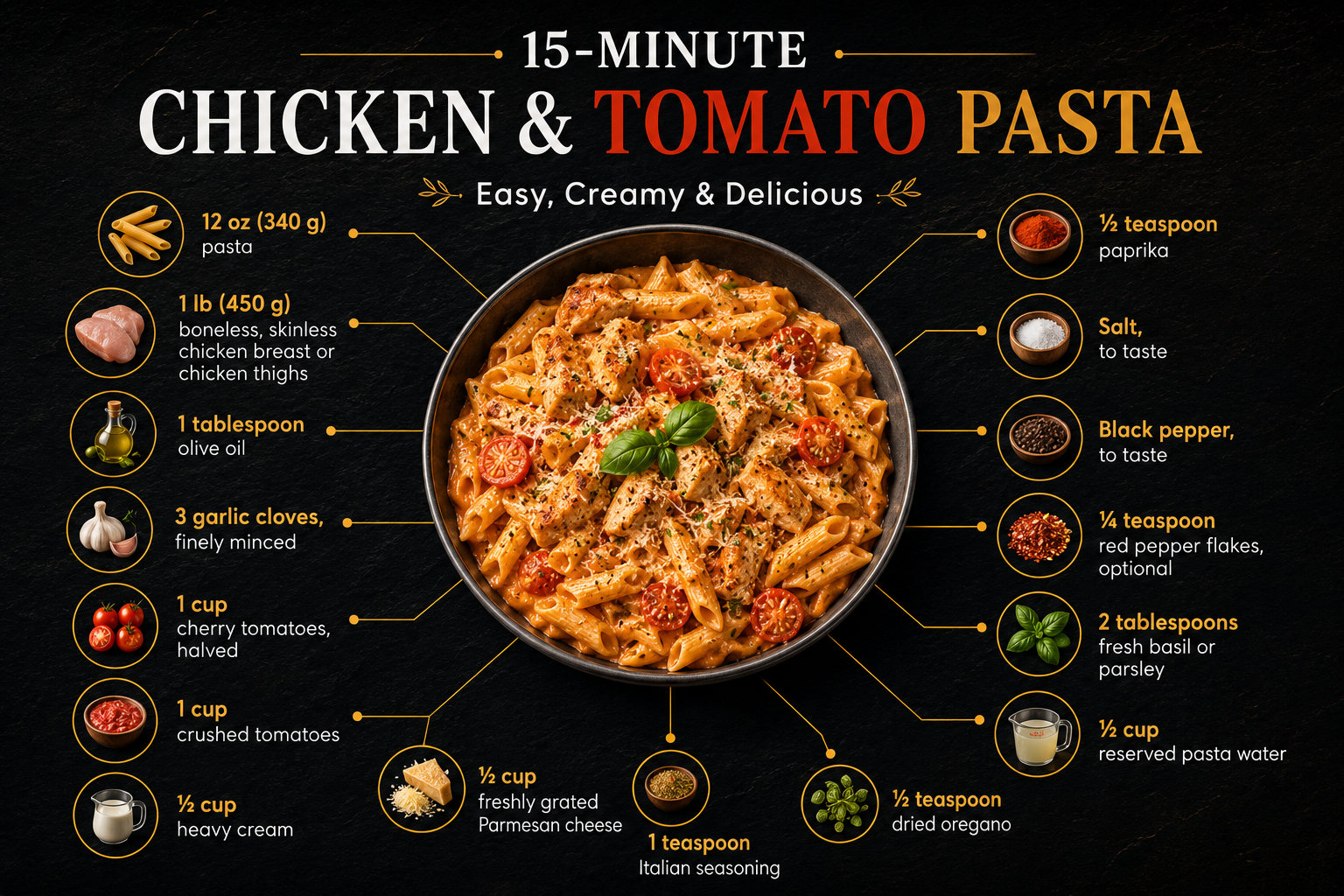
Ingredients for Chicken and Tomato Pasta
This recipe makes approximately 4 servings.
Main Ingredients
- 12 oz (340 g) pasta
- 1 lb (450 g) boneless, skinless chicken breast or chicken thighs
- 1 tablespoon olive oil
- 3 garlic cloves, finely minced
- 1 cup cherry tomatoes, halved
- 1 cup crushed tomatoes
- ½ cup heavy cream
- ½ cup freshly grated Parmesan cheese
- 1 teaspoon Italian seasoning
- ½ teaspoon dried oregano
- ½ teaspoon paprika
- Salt, to taste
- Black pepper, to taste
- ¼ teaspoon red pepper flakes, optional
- 2 tablespoons fresh basil or parsley
- ½ cup reserved pasta water
Ingredient Substitutions
You don’t have to follow the ingredient list rigidly.
Chicken breast: Use boneless chicken thighs if you prefer a more tender and flavorful option.
Pasta: Penne, fusilli, rigatoni, rotini, spaghetti, and linguine can all work.
Heavy cream: Reduce the amount for a lighter sauce, or use a suitable dairy alternative if needed.
Parmesan: Pecorino Romano can provide a sharper, saltier flavor.
Fresh tomatoes: Cherry tomatoes, grape tomatoes, or diced ripe tomatoes can be used.
Crushed tomatoes: Tomato passata or a smooth tomato sauce can be substituted.
How to Make 15-Minute Chicken and Tomato Pasta
Step 1: Prepare Everything First
Quick cooking becomes much easier when your ingredients are ready before you start.
Cut the chicken into small, evenly sized pieces. Mince the garlic, halve the cherry tomatoes, grate the Parmesan, and measure the seasonings.
Having everything ready helps prevent overcooking because you’ll be able to move from one step to the next without stopping to prepare ingredients.
Step 2: Cook the Pasta
Bring a large pot of water to a boil and season it with salt.
Add your pasta and cook according to the package instructions until al dente.
Before draining, reserve approximately ½ cup of pasta water.
Drain the pasta and set it aside.
Why Save Pasta Water?
Pasta water contains starch released from the noodles during cooking. Adding a small amount to the sauce can help loosen a thick sauce while allowing it to cling to the pasta.
Don’t add all of it at once. Start with a tablespoon or two and adjust the consistency gradually.
Step 3: Cook the Chicken
While the pasta cooks, heat olive oil in a large skillet over medium-high heat.
Season the chicken with paprika, Italian seasoning, salt, and black pepper.
Place the chicken pieces in the hot skillet in a single layer.
Cook for approximately 4–6 minutes, stirring occasionally, until the chicken is browned and cooked through.
Chicken cooking time varies according to the size and thickness of the pieces. Rather than relying only on appearance, use a food thermometer when possible. The USDA recommends cooking poultry to a minimum internal temperature of 165°F (74°C).
Transfer the cooked chicken to a plate if you need to make more room in the pan.
Step 4: Make the Tomato Sauce
Using the same skillet, add the minced garlic.
Cook for approximately 30 seconds, stirring frequently.
Add the halved cherry tomatoes and cook for 1–2 minutes until they begin to soften.
Pour in the crushed tomatoes.
Add oregano, Italian seasoning, black pepper, and red pepper flakes if you’re using them.
Stir everything together and allow the tomato mixture to simmer briefly.
Using the same pan helps incorporate the flavorful browned bits left behind by the chicken.
Step 5: Make the Sauce Creamy
Reduce the heat to medium-low.
Add the heavy cream and stir until the tomato mixture becomes smooth and evenly combined.
Gradually add the Parmesan while stirring.
The sauce should become creamy and slightly thick.
If it becomes too thick, add a tablespoon of reserved pasta water at a time.
Avoid aggressively boiling the cream-based sauce. Gentle heat helps maintain a smooth consistency.
Step 6: Add the Chicken and Pasta
Return the cooked chicken to the skillet.
Add the drained pasta.
Toss everything together until the chicken and pasta are coated with the creamy tomato sauce.
If the sauce looks too thick, add a little more pasta water.
Taste the dish and adjust the salt, black pepper, herbs, or red pepper flakes.
Step 7: Garnish and Serve
Turn off the heat and add fresh basil or parsley.
Finish with additional freshly grated Parmesan if desired.
Serve immediately while the sauce is warm and creamy.
Tips for the Best Chicken and Tomato Pasta
Small details can make a significant difference in a simple pasta recipe.
1. Cut Chicken Into Even Pieces
Small, uniform chicken pieces cook more quickly and evenly. Uneven pieces can result in some chicken becoming dry while larger pieces are still cooking.
2. Prepare Ingredients Before Cooking
Because this is a quick recipe, have the chicken, garlic, tomatoes, Parmesan, herbs, and seasonings ready before turning on the stove.
3. Cook Pasta Until Al Dente
Avoid overcooking the pasta. Al dente pasta maintains its structure and works particularly well when tossed with a creamy tomato sauce.
4. Always Reserve Pasta Water
Even if you think you won’t need it, save some. A few tablespoons can transform a sauce that is too thick into a smooth, glossy pasta coating.
5. Don’t Overcrowd the Chicken
Give the chicken enough room in the skillet to brown. If the pan is overcrowded, the chicken may release moisture and steam instead of developing a flavorful browned exterior.
6. Don’t Burn the Garlic
Garlic cooks quickly. Once it becomes fragrant, move to the next step. Burnt garlic can make the entire tomato sauce taste bitter.
7. Taste Before Adding More Salt
Parmesan, salted pasta water, canned tomatoes, and seasonings can all contribute salt. Taste the finished sauce before adding additional salt.
8. Add Fresh Herbs at the End
Fresh basil or parsley can lose some of its fresh flavor when cooked for too long. Add it just before serving.
9. Serve the Pasta Immediately
Creamy pasta sauces naturally thicken as they sit. Serving the pasta soon after tossing it helps maintain the best consistency.
10. Adjust the Sauce Gradually
If the sauce is too thick, add pasta water slowly. If it is too thin, allow it to simmer briefly. Small adjustments are better than trying to correct the consistency all at once.
Pro Tips for Creamy Chicken and Tomato Pasta
Use the Same Skillet for Extra Flavor
After cooking the chicken, don’t immediately wash the skillet.
The browned bits left behind can contribute a deeper savory flavor to the tomato sauce.
Add the garlic and tomatoes directly to the skillet and scrape the bottom gently as the sauce develops.
Grate Parmesan Freshly
Freshly grated Parmesan generally melts more smoothly than larger pre-shredded pieces.
Add it gradually while stirring rather than dumping all of it into the sauce at once.
Don’t Boil the Cream Aggressively
Once the cream is added, lower the heat.
A gentle simmer is sufficient to bring the sauce together. Excessive heat can make a dairy-based sauce less smooth.
Balance Tomato Acidity
If your tomato sauce tastes particularly sharp, don’t immediately add sugar.
First taste the complete sauce after adding cream and Parmesan. The richness of the dairy and savory Parmesan can naturally balance the acidity.
Choose the Right Pasta Shape
Short, ridged pasta shapes such as penne, rigatoni, fusilli, and rotini are excellent for creamy tomato sauce because their surfaces and shapes hold onto the sauce.
Long pasta such as spaghetti and linguine also works well when thoroughly tossed with the sauce.
Add Vegetables at the Right Time
Different vegetables require different cooking times.
- Mushrooms: Add early so they have time to brown.
- Bell peppers: Add with the tomato mixture.
- Zucchini: Add during the sauce stage.
- Spinach: Stir in near the end.
- Frozen peas: Add during the final few minutes.
This allows you to turn a basic chicken tomato pasta recipe into a more complete vegetable-packed dinner.
How to Make This Recipe in About 15 Minutes
The key to a quick pasta dinner isn’t rushing each step. It’s doing several tasks at the same time.
Minute 1–2
- Put pasta water on to boil.
- Cut the chicken.
- Prepare garlic and tomatoes.
Minute 3–6
- Add pasta to boiling water.
- Start cooking chicken in a skillet.
Minute 7–10
- Finish cooking the chicken.
- Begin the garlic and tomato sauce.
Minute 11–13
- Add cream and Parmesan.
- Adjust the sauce with pasta water.
Minute 14–15
- Add pasta and chicken.
- Toss everything together.
- Garnish and serve.
Actual cooking time will vary depending on the pasta variety, pan temperature, ingredient preparation, and cooking equipment.
Best Pasta for Chicken and Tomato Sauce
Penne
Penne is one of the easiest choices for this recipe. Its tube shape allows creamy tomato sauce to get inside and around the pasta.
Fusilli
The spirals capture plenty of sauce and provide a satisfying texture.
Rigatoni
Rigatoni is ideal if you prefer a larger, heartier pasta shape.
Spaghetti
Spaghetti is a classic option. Toss it thoroughly so the creamy tomato sauce coats the strands evenly.
Linguine
Linguine provides a slightly wider surface than spaghetti and works especially well with rich sauces.
Rotini
Rotini’s twisted shape is excellent for holding onto thick tomato and cream sauces.
Fresh Tomatoes vs. Canned Tomatoes
Both options can produce excellent results.
Fresh Tomatoes
Fresh cherry or grape tomatoes provide brightness and a slightly juicy texture.
They’re particularly convenient for quick dinners because they require minimal preparation.
Canned Tomatoes
Canned crushed tomatoes are convenient when fresh tomatoes aren’t available or when you want a smoother sauce.
They also provide a reliable base for a quick creamy tomato pasta.
Why Combine Both?
Using crushed tomatoes for the sauce and fresh cherry tomatoes for texture gives you the best of both worlds: a smooth tomato base with small bursts of fresh tomato flavor.
Easy Variations of Chicken Tomato Pasta
Spicy Chicken Tomato Pasta
Add additional red pepper flakes for a spicy version.
You can also use fresh chili peppers if you enjoy stronger heat.
Garlic Parmesan Chicken Pasta
Increase the garlic slightly and finish the dish with extra Parmesan.
This creates a stronger garlic and cheese profile.
Chicken and Spinach Pasta
Add a generous handful of fresh spinach during the final minutes of cooking.
The residual heat will wilt the spinach into the sauce.
Chicken Mushroom Pasta
Sauté sliced mushrooms after cooking the chicken, allowing them to brown before adding the tomatoes.
Chicken and Vegetable Pasta
Add bell peppers, zucchini, broccoli, spinach, mushrooms, or peas.
This is an easy way to create a colorful chicken vegetable pasta.
Cream-Free Chicken Tomato Pasta
Simply leave out the cream.
Use tomato sauce, pasta water, herbs, olive oil, and Parmesan to create a lighter tomato-based pasta.
Extra-Cheesy Chicken Pasta
Add additional Parmesan or another melting cheese for a richer, more indulgent dish.
How to Make Chicken and Tomato Pasta Healthier
This recipe can be modified depending on your dietary preferences.
Add More Vegetables
Spinach, broccoli, mushrooms, zucchini, peas, and bell peppers can increase the variety of vegetables in the meal.
Try Whole-Wheat Pasta
Whole-wheat pasta provides more fiber than standard refined pasta and has a slightly nuttier flavor.
Reduce the Cream
For a lighter version, use less heavy cream and rely on pasta water and Parmesan to create a creamy texture.
Choose Skinless Chicken
Skinless chicken breast is a convenient lean protein choice.
Be Mindful of Salt
Season each component carefully because Parmesan and salted pasta water already contribute sodium.
What to Serve With Chicken and Tomato Pasta
This dish can be served on its own, but a simple side can make the meal feel more complete.
Fresh Green Salad
A crisp salad with lettuce, cucumber, tomatoes, and a light vinaigrette provides freshness alongside the creamy pasta.
Garlic Bread
Garlic bread is a classic pairing and is especially useful for enjoying any remaining tomato cream sauce.
Roasted Vegetables
Roasted broccoli, zucchini, asparagus, or bell peppers can add texture and variety.
Steamed Green Beans
Simple steamed green beans provide a lighter side without competing with the creamy pasta.
Common Mistakes to Avoid
Overcooking the Chicken
Chicken breast can become dry if cooked for too long.
Cut it into evenly sized pieces and check the internal temperature.
Skipping Pasta Water
Don’t drain every drop of pasta water before remembering that it can help adjust the sauce.
Cooking Cream at Excessive Heat
High heat isn’t necessary for a creamy tomato sauce. Keep the temperature moderate after adding the cream.
Adding Too Much Sauce
The pasta should be generously coated rather than swimming in sauce.
Not Seasoning in Layers
Season the chicken and sauce separately, then taste the final dish.
Using Uneven Chicken Pieces
Large and small pieces cook at different rates. Consistent sizing makes the cooking process much easier.
Adding Parmesan Too Quickly
Gradually adding cheese while stirring can help create a smoother sauce.
How to Store Leftover Chicken Tomato Pasta
If you have leftovers, transfer them to a suitable airtight container and refrigerate promptly.
USDA guidance recommends refrigerating leftovers at 40°F (4°C) or below and using refrigerated leftovers within 3–4 days. Food should not be left at room temperature for more than two hours, or one hour when the temperature is above 90°F (32°C).
For faster cooling, dividing leftovers into shallow containers is recommended.
How to Reheat Creamy Chicken Pasta
Creamy pasta tends to become thicker after refrigeration because the noodles continue absorbing moisture.
To restore the texture:
- Place the pasta in a skillet.
- Add a small splash of water, milk, or broth.
- Heat gently over low to medium heat.
- Stir frequently.
- Add another small splash of liquid if necessary.
- Finish with a little Parmesan or fresh herbs.
You can also use a microwave. Cover the container loosely and heat in short intervals, stirring between intervals.
When reheating leftovers, USDA recommends heating them thoroughly to 165°F (73.8°C) throughout.
Can You Freeze Chicken and Tomato Pasta?
Yes, although the texture of a cream-based sauce may change after freezing and thawing.
For the best quality, fresh pasta is preferable.
If you choose to freeze leftovers, place them in an appropriate airtight freezer container and label the container with the date.
Thaw frozen leftovers safely in the refrigerator before reheating.
USDA notes that refrigerated leftovers are generally best used within 3–4 days, while frozen leftovers can be kept longer, although quality may decline over time.
Frequently Asked Questions
Can I make chicken and tomato pasta without cream?
Yes. Omit the cream and use crushed tomatoes, Parmesan, olive oil, herbs, and reserved pasta water to create a lighter tomato-based sauce.
What chicken is best for this pasta recipe?
Boneless, skinless chicken breast is convenient and lean, while boneless chicken thighs generally provide a more tender texture.
Can I use leftover cooked chicken?
Yes. Using already cooked chicken can make this a particularly fast pasta dinner. Add the chicken toward the end so it warms through without becoming unnecessarily dry.
Can I use tomato sauce instead of crushed tomatoes?
Yes. Tomato sauce can be substituted, although you may need to adjust the seasoning because prepared sauces can already contain salt and herbs.
How do I make tomato sauce less acidic?
First, taste the completed sauce. Cream and Parmesan can help balance the tomato flavor. Using ripe tomatoes or a good-quality canned tomato product can also improve the overall taste.
Why is my creamy tomato sauce too thick?
Add reserved pasta water one tablespoon at a time until the sauce reaches the consistency you prefer.
Why is my pasta sauce watery?
Let it simmer gently for a short period and toss it with the pasta. The starch from the pasta water can also help the sauce adhere to the noodles.
Can I make this chicken pasta spicy?
Yes. Red pepper flakes, fresh chili, or another preferred source of heat can be added.
Can I make this recipe vegetarian?
Absolutely. Remove the chicken and add mushrooms, spinach, zucchini, bell peppers, or another combination of vegetables.
What is the best pasta shape for creamy tomato sauce?
Penne, rigatoni, fusilli, and rotini are excellent choices because their shapes hold creamy sauce well. Spaghetti and linguine are also suitable.
Quick Recipe Card
Recipe: 15-Minute Chicken and Tomato Pasta
Servings: 4
Prep time: About 5 minutes
Cooking time: About 10–15 minutes
Total time: Approximately 15–25 minutes
Difficulty: Easy
Cuisine: Italian-inspired
Course: Main dish
Main Ingredients
- Pasta
- Boneless chicken
- Cherry tomatoes
- Crushed tomatoes
- Garlic
- Heavy cream
- Parmesan
- Olive oil
- Italian seasoning
- Oregano
- Fresh basil or parsley
Cooking Method
- Cook pasta until al dente.
- Reserve pasta water.
- Season and cook chicken.
- Sauté garlic and tomatoes.
- Add crushed tomatoes and herbs.
- Stir in cream and Parmesan.
- Return chicken to the skillet.
- Add pasta and toss.
- Adjust consistency with pasta water.
- Garnish and serve.
Pro Tips for Meal Prep
If you plan to prepare this easy chicken pasta recipe ahead of time, a few changes can help maintain better texture.
Keep Sauce and Pasta Separate When Possible
If you’re preparing the meal significantly ahead of serving, storing pasta and sauce separately can prevent the noodles from absorbing excessive sauce.
Don’t Overcook the Pasta
If pasta will be reheated later, slightly firmer pasta can help prevent it from becoming overly soft.
Store in Individual Portions
Individual airtight containers make reheating easier and can help reduce unnecessary reheating of the entire batch.
Add Fresh Garnishes Later
Keep fresh basil, parsley, and additional Parmesan separate and add them immediately before serving.
Related Recipe Ideas
Once you’ve made this recipe, you can easily build variations around the same basic technique.
Try:
- Creamy chicken pasta
- Chicken Alfredo pasta
- Spicy tomato chicken pasta
- Garlic Parmesan chicken pasta
- Chicken spinach pasta
- Chicken mushroom pasta
- One-pan chicken pasta
- Chicken penne pasta
- Creamy tomato penne
- Tomato basil chicken pasta
- Easy weeknight chicken pasta
- Quick creamy pasta dinner
- Chicken pasta with fresh tomatoes
- Chicken pasta with tomato cream sauce
These variations use many of the same ingredients while allowing you to create different flavors.
Final Thoughts
This 15-minute chicken and tomato pasta recipe is proof that a flavorful homemade meal doesn’t need complicated techniques or an enormous ingredient list.
Tender seasoned chicken, juicy tomatoes, garlic, herbs, Parmesan, and a creamy tomato sauce come together with pasta to create a comforting dinner that’s suitable for busy weeknights.
The biggest secrets are simple: prepare your ingredients first, cut the chicken evenly, cook the pasta until al dente, save some pasta water, control the heat when adding cream, and season the sauce gradually.
Once you understand the basic technique, you can easily turn this recipe into spicy chicken tomato pasta, chicken spinach pasta, garlic Parmesan chicken pasta, chicken mushroom pasta, or a lighter cream-free tomato chicken pasta.
Whether you’re searching for an easy chicken pasta recipe, a quick weeknight dinner, a creamy tomato pasta recipe, or a satisfying 15-minute meal, this recipe provides a flexible foundation that you can adapt to your ingredients and personal taste.
Most importantly, don’t be afraid to make it your own. Cooking is about understanding the basic method and then adjusting flavors, textures, vegetables, and seasonings to create a dish your household genuinely enjoys.