





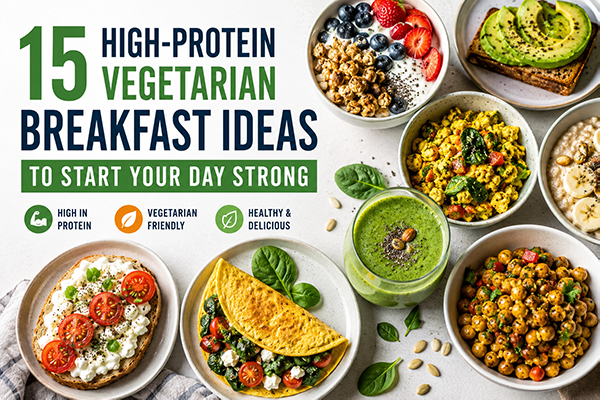
For vegetarians, getting enough protein at breakfast can sometimes require a little more planning. Many traditional breakfast foods are built around toast, cereal, fruit, pancakes, or other carbohydrate-rich foods that may contain relatively little protein on their own.
The good news is that creating a high-protein vegetarian breakfast doesn’t have to be complicated.
Greek yogurt, cottage cheese, eggs, tofu, lentils, beans, milk, soy milk, nuts, seeds, oats, and whole grains can all help turn an ordinary breakfast into a more balanced meal.
Whether you’re looking for a quick breakfast before work, something you can meal-prep for the week, or a filling vegetarian meal after a morning workout, these 15 ideas give you plenty of options.
Why Is Protein Important at Breakfast?
Protein is one of the three major macronutrients, alongside carbohydrates and fat. Your body uses dietary protein to provide amino acids needed for numerous functions, including maintaining and repairing body tissues.
Protein can also contribute to satiety, which is one reason a breakfast containing a meaningful source of protein may feel more satisfying than a meal made mostly from refined carbohydrates.
That doesn’t mean every breakfast needs to contain an enormous amount of protein. Your overall diet matters more than any single meal.
However, spreading protein-containing foods throughout the day can be a practical way to meet your daily needs.
A balanced vegetarian breakfast might combine:
Protein + fiber-rich carbohydrates + healthy fats + fruits or vegetables
For example, rather than eating plain toast, you could have whole-grain toast topped with cottage cheese and tomatoes. Instead of plain oatmeal, prepare it with milk or soy milk and add Greek yogurt, chia seeds, and nuts.
Small changes can make a noticeable difference to the nutritional profile of your breakfast.
How Much Protein Should a Vegetarian Breakfast Have?
There isn’t one ideal amount that applies to everyone.
Protein requirements vary according to factors such as age, body size, overall calorie intake, activity level, pregnancy, and individual health circumstances.
For many adults, a breakfast containing roughly 15 to 30 grams of protein can be a practical target when it fits their overall dietary needs. Athletes and people with higher protein requirements may choose meals containing more.
You don’t necessarily need protein powder to reach those numbers.
For example, Greek yogurt combined with oats, seeds, and nuts can provide substantial protein from ordinary foods. Eggs paired with cottage cheese and whole-grain toast can do the same.
Keep in mind that the protein estimates throughout this article are approximate. Actual amounts depend on the brands, ingredients, serving sizes, and preparation methods you use.
1. Greek Yogurt Parfait With Berries, Nuts and Seeds
A Greek yogurt parfait is one of the easiest high-protein vegetarian breakfasts because it requires virtually no cooking.
Start with a generous serving of plain Greek yogurt. Add fresh berries, such as strawberries, blueberries, or raspberries, followed by chia seeds, pumpkin seeds, chopped almonds, or walnuts. 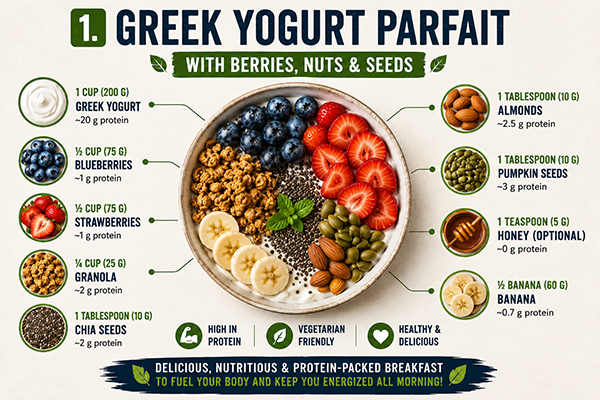
For additional carbohydrates and texture, add a small amount of oats or low-sugar granola.
What you’ll need
- Plain Greek yogurt
- Strawberries or blueberries
- Chia or pumpkin seeds
- Almonds or walnuts
- Oats or granola
- Cinnamon, optional
Depending on the yogurt and portion size, this breakfast can easily provide around 20 grams or more of protein.
Greek yogurt is particularly useful because it typically contains considerably more protein than many conventional yogurts.
Choose unsweetened yogurt if you want greater control over added sugar. Fresh fruit can provide plenty of natural sweetness.
Quick tip: Prepare the dry toppings in individual containers ahead of time. In the morning, simply add yogurt and fruit.
2. Cottage Cheese Toast With Tomato and Avocado
If you prefer savory breakfasts, cottage cheese toast is an easy alternative to sweet oatmeal or cereal.
Toast one or two slices of whole-grain bread and spread a generous layer of cottage cheese over the top. Add sliced tomato, avocado, black pepper, herbs, and a small pinch of salt.
Cottage cheese provides most of the protein, while whole-grain bread contributes additional protein and fiber.
Easy topping combinations
Try cottage cheese with:
- Tomato, basil and black pepper
- Avocado and chili flakes
- Cucumber and fresh herbs
- Roasted peppers and spinach
- Berries and cinnamon for a sweet version
Depending on your portions, two loaded slices can provide approximately 20 to 25 grams of protein.
It’s also easy to customize, making this a useful breakfast when several people in the household have different tastes.
- Vegetable Omelet With Cottage Cheese
Eggs are one of the most convenient protein sources for lacto-ovo vegetarians.
A standard vegetable omelet becomes considerably more substantial when you add cottage cheese or another protein-rich dairy product.
Whisk two or three eggs and cook them with vegetables such as spinach, mushrooms, onions, tomatoes, and bell peppers. Fold cottage cheese into the omelet shortly before serving.
Good vegetables for an omelet
You can use:
- Spinach
- Mushrooms
- Tomatoes
- Bell peppers
- Onions
- Broccoli
- Zucchini
Serve your omelet with whole-grain toast or fruit for a more complete meal.
Depending on the number of eggs and amount of cottage cheese used, your breakfast may provide around 20 to 30 grams of protein.
This is also a useful recipe for clearing leftover vegetables from your refrigerator.
4. Tofu Scramble With Spinach and Vegetables
Looking for a vegan high-protein breakfast? Tofu scramble deserves a place in your regular rotation.
Firm or extra-firm tofu works particularly well because it has a texture that can resemble scrambled eggs when crumbled.
Drain the tofu, crumble it into a skillet, and cook it with spinach, onions, mushrooms, peppers, and your preferred seasonings.
Turmeric can add a yellow color, while nutritional yeast can contribute a savory flavor.
Simple tofu scramble ingredients
- Firm or extra-firm tofu
- Spinach
- Onion
- Bell pepper
- Mushrooms
- Turmeric
- Black pepper
- Nutritional yeast, optional
Serve it alone, with whole-grain toast, or inside a breakfast wrap.
A substantial serving of tofu can provide roughly 15 to 25 grams of protein, depending on the tofu and serving size.
For additional protein, add black beans or serve the scramble with unsweetened soy milk.
5. Overnight Oats With Greek Yogurt and Chia Seeds
Overnight oats are ideal for mornings when you don’t have time to cook.
The basic method is simple: combine oats and liquid in a container, refrigerate overnight, and eat them cold or warm them the following morning.
To make overnight oats higher in protein, use Greek yogurt and dairy or soy milk instead of relying entirely on water or lower-protein plant milks.
Try this combination
Combine:
- Rolled oats
- Greek yogurt
- Milk or soy milk
- Chia seeds
- Berries
- Cinnamon
- Chopped nuts
Leave the mixture in the refrigerator overnight.
Depending on your ingredient quantities, a serving can provide approximately 20 to 30 grams of protein.
You can prepare several jars at once, making this one of the most convenient vegetarian breakfast meal-prep ideas.
Lentils don’t have to be reserved for lunch and dinner.
A warm lentil breakfast bowl can be particularly satisfying if you prefer savory food in the morning.
Cooked lentils provide plant protein as well as fiber. Combine them with sautéed spinach, tomatoes, peppers, mushrooms, or roasted vegetables.
If you eat eggs, add a poached or fried egg. Vegans can add tofu, tempeh, or a spoonful of hummus instead.
Build your breakfast bowl with
Base: cooked lentils
Vegetables: spinach, tomato, peppers and mushrooms
Protein boost: egg, tofu or tempeh
Topping: herbs, seeds or avocado
Batch-cooking lentils makes this much faster. Keep cooked lentils refrigerated and reheat the amount you need each morning.
This is also an excellent option for people who simply don’t enjoy conventional sweet breakfast foods.
7. Peanut Butter Banana Oatmeal
Oatmeal is nutritious and convenient, but plain oats aren’t necessarily a particularly high-protein breakfast.
The solution is to build around them.
Cook rolled oats with dairy milk or soy milk. Stir in natural peanut butter and top with sliced banana, chia seeds, hemp seeds, or chopped peanuts.
Ingredients
- Rolled oats
- Milk or soy milk
- Natural peanut butter
- Banana
- Chia or hemp seeds
- Cinnamon
Using milk rather than water increases the protein content without adding an extra preparation step.
You can also stir Greek yogurt into your oatmeal after cooking if dairy is part of your diet.
The result is creamy, naturally sweet and much more satisfying than a packet of plain instant oatmeal.
8. Chickpea Breakfast Wrap
Chickpeas are inexpensive, versatile and easy to incorporate into vegetarian meals.
For breakfast, lightly mash cooked chickpeas and season them with paprika, cumin, black pepper, lemon juice, and a small amount of olive oil.
Add the mixture to a whole-grain wrap with spinach, tomatoes, cucumber, peppers, or avocado.
For extra protein, add scrambled eggs, tofu, Greek yogurt-based sauce, or a small amount of cheese.
Meal-prep advantage
Prepare the chickpea filling in advance and refrigerate it. In the morning, you only need to assemble and warm your wrap.
If you need breakfast on the go, wrap it tightly and take it with you.
This makes chickpea wraps particularly useful for students, commuters, and busy professionals.
9. High-Protein Vegetarian Breakfast Burrito
A breakfast burrito can contain an impressive combination of protein, fiber, vegetables, and carbohydrates in one convenient meal.
Start with a whole-grain tortilla and add scrambled eggs or tofu, black beans, sautéed peppers, onions, salsa, and a little cheese.
A balanced filling could include
- Two scrambled eggs or tofu
- Black beans
- Bell peppers
- Onion
- Salsa
- Grated cheese
- Spinach
- Whole-grain tortilla
Black beans and eggs complement each other well and make the burrito much more substantial than an egg-only breakfast.
These burritos can also be prepared ahead of time. Wrap individual portions carefully and refrigerate or freeze them according to appropriate food-storage practices.
Reheat thoroughly before eating.
10. Protein-Rich Smoothie With Greek Yogurt
Smoothies are convenient, but a fruit-only smoothie may not keep you satisfied for very long.
The key is adding a meaningful protein source.
For a vegetarian smoothie, Greek yogurt, cottage cheese, dairy milk, or soy milk can form the protein-rich base.
Blend it with berries, banana, oats, nut butter, chia seeds, or ground flaxseed.
Simple breakfast smoothie
Blend:
- Greek yogurt
- Milk or soy milk
- Frozen berries
- Half a banana
- Rolled oats
- Peanut or almond butter
- Chia seeds
Adjust the amount of liquid until you get the consistency you prefer.
Protein powder is optional rather than essential. If you use one, choose a product that fits your dietary preferences and follow its serving instructions.
For a vegan version, replace Greek yogurt with a higher-protein plant-based yogurt or silken tofu and use soy milk.
11. Paneer and Vegetable Breakfast Bowl
Paneer can turn vegetables into a filling, protein-rich vegetarian breakfast.
Cut paneer into small cubes and lightly cook it with tomatoes, onions, peppers, spinach, cumin, black pepper, and other spices you enjoy.
You can serve the mixture by itself or pair it with a whole-grain roti or toast.
Quick paneer scramble
Crumble paneer and sauté it with:
- Onion
- Tomato
- Bell pepper
- Spinach
- Turmeric
- Cumin
- Coriander
- Black pepper
This creates a breakfast similar to paneer bhurji.
Paneer can contribute substantial protein, although its calorie and saturated-fat content can vary. Portion size and the rest of your overall diet therefore matter.
If you regularly enjoy Indian vegetarian food, this is one of the easiest ways to move beyond sweet breakfasts while still getting plenty of protein.
12. Chia Pudding With Yogurt, Nuts and Fruit
Chia pudding is another breakfast that can be made the night before.
Chia seeds absorb liquid and develop a pudding-like texture after several hours.
On their own, however, chia seeds may not provide enough protein to make the meal truly high in protein. Pairing them with Greek yogurt, soy milk, nuts, and seeds creates a better-balanced breakfast.
Basic preparation
Mix chia seeds with milk or soy milk and refrigerate overnight.
In the morning, add:
- Greek yogurt or high-protein plant yogurt
- Fresh berries
- Pumpkin seeds
- Almonds
- Cinnamon
If you prefer a smoother texture, blend the chia mixture before refrigerating it.
This breakfast also offers an easy way to include seeds and fruit in your morning meal.
13. Egg and Black Bean Breakfast Bowl
Eggs and black beans make a simple protein-focused combination.
Start with warm black beans and add scrambled, boiled, poached, or fried eggs. Complete the bowl with tomatoes, spinach, salsa, avocado, and herbs.
You can also add a small serving of brown rice, quinoa, or roasted potatoes when you want more carbohydrates.
Easy bowl formula
Protein: eggs + black beans
Vegetables: spinach + tomato + peppers
Carbohydrate: quinoa, toast or potatoes
Healthy fat: avocado
Flavor: salsa + fresh herbs
The beans contribute both protein and fiber, while eggs provide additional protein.
It’s a particularly practical breakfast after a busy morning or when you know lunch will be several hours away.
14. Quinoa Breakfast Bowl With Milk, Yogurt and Nuts
Quinoa is usually associated with salads and dinner bowls, but it also works surprisingly well as a breakfast grain.
Cook quinoa ahead of time and reheat it with milk or soy milk. Add Greek yogurt, berries, chopped almonds, pumpkin seeds, cinnamon, and a small amount of fruit.
The result is similar to oatmeal but with a different texture.
Sweet quinoa breakfast bowl
Try combining:
- Cooked quinoa
- Greek yogurt
- Milk or soy milk
- Blueberries
- Almonds
- Pumpkin seeds
- Cinnamon
For a savory version, combine quinoa with tofu or eggs, spinach, tomatoes, and avocado.
Cooking a larger batch of quinoa at the beginning of the week can save considerable preparation time.
15. High-Protein Vegetarian Breakfast Sandwich
Sometimes you just want a breakfast you can hold in one hand.
A vegetarian breakfast sandwich can provide plenty of protein when you choose the filling carefully.
Use a whole-grain English muffin, bagel thin, or bread and fill it with egg, cottage cheese, sliced cheese, tofu, or tempeh.
Add vegetables for flavor, texture, and additional nutrients.
Easy combination
Try:
Whole-grain English muffin + egg + cottage cheese + spinach + tomato
Or make it vegan:
Whole-grain bread + seasoned tofu + avocado + spinach + tomato
You can prepare several breakfast sandwiches ahead of time and refrigerate or freeze them appropriately for quick weekday breakfasts.
Best Vegetarian Protein Sources for Breakfast
You don’t need to eat the same meal every morning to increase your breakfast protein. Keeping several versatile protein foods at home makes it much easier.
Useful vegetarian breakfast protein sources include:
| Food | Why It Works at Breakfast |
| Greek yogurt | High protein and requires no cooking |
| Cottage cheese | Works in sweet and savory meals |
| Eggs | Quick and highly versatile |
| Tofu | Excellent plant-based option |
| Tempeh | Protein-rich and works well in savory dishes |
| Lentils | Provides protein and fiber |
| Chickpeas | Useful for wraps, bowls and scrambles |
| Black beans | Great with eggs, tofu and burritos |
| Soy milk | Convenient way to increase protein in oats and smoothies |
| Paneer | Useful for savory vegetarian breakfasts |
| Peanut butter | Easy addition to oats, toast and smoothies |
| Hemp seeds | Easy topping for yogurt and oatmeal |
| Pumpkin seeds | Adds protein, crunch and minerals |
| Quinoa | Versatile whole-grain-style breakfast base |
| Oats | Provides some protein and pairs easily with higher-protein foods |
Protein content varies significantly among brands and serving sizes, particularly for yogurt, tofu, bread, plant-based milk, and meat alternatives. Check the nutrition label when protein intake is important to you.
How to Make Any Vegetarian Breakfast Higher in Protein
You don’t necessarily need an entirely new recipe. Often, one or two ingredient swaps are enough.
If you normally make oatmeal with water, try dairy or soy milk. If you eat regular yogurt, compare its protein content with Greek or strained yogurt. Add seeds to oatmeal, beans to breakfast burritos, cottage cheese to eggs, or tofu to vegetable bowls.
Another useful strategy is to combine multiple moderate-protein foods.
For example:
Oats + soy milk + peanut butter + chia seeds
may work better as a protein-focused meal than relying on oats alone.
Similarly:
Whole-grain toast + eggs + cottage cheese
combines several protein sources in one simple breakfast.
Vegetarian vs. Vegan High-Protein Breakfasts
A vegetarian diet can take several forms, so the right breakfast depends on which foods you eat.
Lacto-ovo vegetarians can use eggs and dairy foods such as Greek yogurt, cottage cheese, milk, and paneer.
Vegans can focus on tofu, tempeh, beans, lentils, soy milk, soy yogurt, nuts, seeds, and whole grains.
If you’re following a completely plant-based diet, soy foods can be particularly convenient because products such as tofu and soy milk tend to contain more protein than many other plant-based alternatives.
Always compare nutrition labels. Two plant-based yogurts or milks that look almost identical can have very different protein contents.
Quick High-Protein Vegetarian Breakfasts for Busy Mornings
You don’t need 30 minutes in the kitchen every morning.
If time is limited, focus on breakfasts that can be assembled rather than cooked.
Overnight oats, Greek yogurt bowls, cottage cheese toast, chia pudding, smoothies, and pre-made breakfast burritos are all practical choices.
Meal preparation can make things even easier.
Cook lentils, quinoa, or beans ahead of time. Wash and chop vegetables. Portion nuts and seeds. Prepare overnight oats in jars. Make several breakfast wraps and store them properly.
Then breakfast becomes a two-minute decision rather than a morning project.
Common Mistakes When Building a High-Protein Vegetarian Breakfast
One common mistake is assuming that any food marketed as healthy is automatically high in protein.
Granola, almond milk, avocado toast, fruit smoothies, and oatmeal can all be part of a nutritious diet, but their protein content may be relatively modest depending on how they’re prepared.
Another mistake is focusing exclusively on protein.
A good breakfast doesn’t have to become a bowl containing nothing but protein-rich ingredients. Fruits, vegetables, whole grains, and sources of unsaturated fat can contribute fiber, vitamins, minerals, flavor, and variety.
Finally, don’t assume plant-based automatically means high protein. Some plant-based milk and yogurt alternatives contain very little protein.
Reading the nutrition label takes only a few seconds and makes comparisons much easier.
7-Day High-Protein Vegetarian Breakfast Plan
If you’re not sure where to begin, here’s a simple week of ideas:
Monday: Greek yogurt parfait with berries, oats and pumpkin seeds
Tuesday: Vegetable omelet with cottage cheese and whole-grain toast
Wednesday: Overnight oats with Greek yogurt and chia seeds
Thursday: Tofu scramble with spinach, mushrooms and toast
Friday: Chickpea breakfast wrap with vegetables and yogurt sauce
Saturday: Paneer and vegetable breakfast bowl
Sunday: Egg and black bean breakfast burrito
You can swap meals according to your dietary preferences, schedule, and ingredients available at home.
The goal isn’t to follow a rigid menu. It’s to have enough reliable breakfast combinations that getting protein in the morning becomes easy.
Frequently Asked Questions
What is a good high-protein breakfast for vegetarians?
Greek yogurt with nuts and seeds, eggs with cottage cheese, tofu scramble, overnight oats with Greek yogurt, lentil bowls, paneer bhurji, and black bean breakfast burritos are all good options. The best choice depends on whether you eat eggs and dairy and how much protein you need overall.
How can vegetarians get 20 grams of protein at breakfast?
Combine more than one protein-rich ingredient. Greek yogurt with seeds and oats, eggs with cottage cheese, or tofu with beans can often reach approximately 20 grams of protein or more, depending on serving sizes and brands.
What vegetarian breakfast has the most protein?
There isn’t one single highest-protein breakfast. Meals containing combinations such as Greek yogurt and seeds, eggs and cottage cheese, tofu and beans, or paneer with whole grains can all provide substantial protein.
What are good vegan protein breakfast options?
Tofu scramble, tempeh breakfast bowls, lentil bowls, chickpea wraps, oatmeal made with soy milk, chia pudding with soy yogurt, and smoothies made with soy milk and tofu are useful vegan options.
Can oatmeal be a high-protein breakfast?
Yes, but the ingredients matter. Instead of preparing oats only with water, use dairy or soy milk and add Greek yogurt, peanut butter, hemp seeds, chia seeds, or nuts.
Is peanut butter a good source of breakfast protein?
Peanut butter contributes protein, but it also contains substantial fat and calories. It works particularly well as one component of a breakfast rather than the only protein source. Combine it with oats, milk, soy milk, whole-grain bread, or yogurt.
Do I need protein powder for a high-protein vegetarian breakfast?
No. Many people can make protein-rich breakfasts using ordinary foods such as Greek yogurt, cottage cheese, eggs, tofu, beans, lentils, milk, soy foods, nuts, and seeds. Protein powder is simply another convenient option for people who choose to use it.
Are high-protein vegetarian breakfasts good for weight loss?
Protein-rich meals may help with fullness, but weight management depends on overall energy intake, dietary patterns, physical activity, sleep, and other individual factors. A food being high in protein doesn’t automatically make it low in calories or suitable for weight loss.
What is the easiest vegetarian protein breakfast?
Greek yogurt with fruit and seeds is one of the simplest options because it requires no cooking. Cottage cheese toast, overnight oats, and smoothies are also quick choices.
What can I eat instead of eggs for protein at breakfast?
Tofu, tempeh, Greek yogurt, cottage cheese, paneer, lentils, chickpeas, black beans, soy milk, nuts, and seeds can all help provide protein without eggs. For a completely vegan breakfast, focus on soy foods, legumes, nuts, seeds, and whole grains.
Final Thoughts
Eating a high-protein vegetarian breakfast doesn’t require complicated recipes, expensive specialty foods, or protein powder at every meal.
The simplest approach is to start with a reliable protein source and build the rest of your breakfast around it.
Greek yogurt, cottage cheese, eggs, tofu, paneer, lentils, chickpeas, black beans, and soy foods give you plenty of options. Add whole grains, fruit or vegetables, nuts, and seeds to create meals that are nutritious, satisfying, and enjoyable.
Most importantly, choose breakfasts that fit your actual mornings.
If you have five minutes, make cottage cheese toast or a yogurt bowl. If you enjoy cooking, prepare an omelet or tofu scramble. If mornings are hectic, make overnight oats or breakfast burritos ahead of time.
A sustainable breakfast routine isn’t about eating the “perfect” meal every day. It’s about having a handful of easy, protein-rich vegetarian breakfasts you genuinely enjoy and can prepare consistently.