






Why Do I Still Have Dark Circles Even After Getting Enough Sleep?
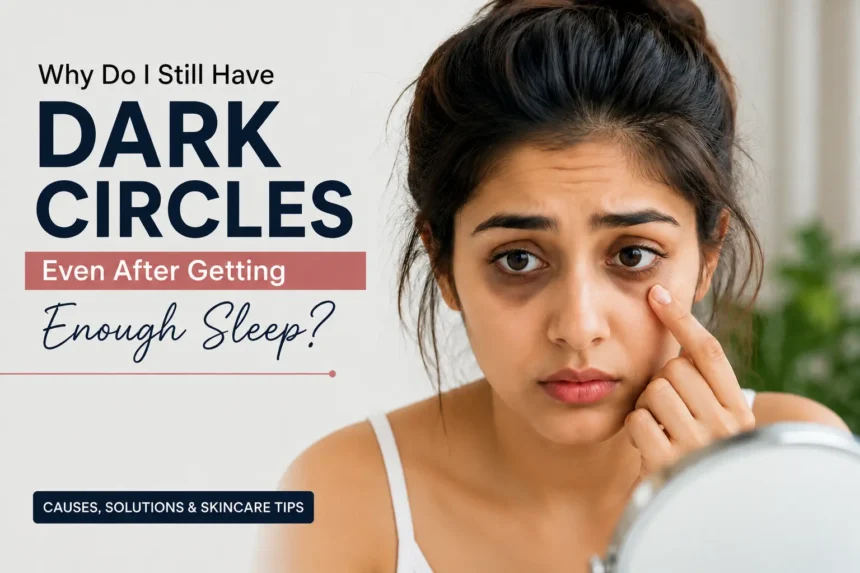
You go to bed at a reasonable time, get around eight hours of sleep, and still wake up looking like you barely slept. If you’ve ever looked in the mirror and wondered, “Why do I still have dark circles even after getting enough sleep?”, you’re definitely not alone.
The frustrating part is that sleep is only one piece of the puzzle.
Dark circles can be linked to genetics, pigmentation, allergies, rubbing or scratching the eyes, visible blood vessels, dehydration, aging, and the natural shape of the area beneath your eyes. In some people, several of these factors happen at the same time.
That is why simply sleeping more doesn’t always make them disappear.
The good news is that understanding what type of dark circle you have can make your skincare routine much more sensible. Instead of trying random eye creams, you can focus on the factor most likely contributing to the discoloration.
Why Do Dark Circles Happen Even When You Sleep Enough?
One of the biggest misconceptions about under-eye circles is that they are always caused by tiredness.
They’re not.
Dark circles are a broad term for a darker appearance beneath the eyes, and the reason can be very different from one person to another. Dermatology literature generally describes several contributing factors, including pigmentation, vascular changes, structural shadows, swelling, genetics and skin changes associated with aging.
Here are some of the most common explanations.
1. Your dark circles may be genetic
Take a close look at your parents or other close family members. If several relatives naturally have darker skin around their eyes, genetics may be playing a significant role.
Some people naturally have more pigmentation around the eyes or thinner skin that makes underlying structures more noticeable.
In that situation, getting eight or nine hours of sleep may improve the tired appearance of your face without completely removing the darkness.
This is one reason genetic dark circles can be particularly frustrating: you’re doing nothing “wrong.”
2. It may actually be pigmentation
Sometimes the darkness beneath the eyes is primarily brown or deeper in tone rather than blue or purple.
This can happen because of increased melanin production and may be worsened by sun exposure or previous inflammation. Research on periorbital hyperpigmentation identifies excessive pigmentation and post-inflammatory changes among possible causes.
If your under-eye area has looked consistently brown for years, sleeping longer probably won’t solve the underlying pigmentation.
Sun protection becomes particularly important here because ultraviolet exposure can aggravate pigmentation.
3. Allergies can make your eyes look darker
Do your eyes itch? Do you frequently rub them? Do you experience seasonal congestion or watery eyes?
Allergies may be contributing.
Repeated rubbing or scratching can irritate the delicate skin around your eyes. Conditions such as dermatitis can also affect the area and make blood vessels more noticeable.
If you constantly touch your eyes because they feel itchy, treating the irritation may be just as important as changing your skincare routine.
4. Your under-eye skin may simply be thin
The skin around the eyes is delicate. As skin becomes thinner, underlying blood vessels and structures can become more visible.
This can create a blue, purple or darker appearance even when you’re completely rested.
This is particularly easy to mistake for “tiredness” because the result can make your face look less refreshed.
5. Shadows can look like pigmentation
Here’s something many people overlook.
Not every dark-looking under-eye is actually darker skin.
The natural shape of your eye socket, tear troughs, puffiness and changes in facial volume can create shadows. Aging can also change the skin and underlying tissues around the eyes, making these shadows more noticeable.
If the darkness changes dramatically depending on lighting or the position of your head, shadowing may be part of the reason.
This also explains why some eye creams seem to do very little: a cream cannot completely change the underlying structure that creates a shadow.
Could Dehydration Be Making Your Dark Circles Worse?
Possibly.
When your skin is dehydrated, it can look dull and less plump, which may make the under-eye area appear more tired.
But drinking enormous amounts of water is not a guaranteed treatment for dark circles.
If you aren’t drinking enough fluids, correcting that can support healthier-looking skin. However, persistent dark circles caused by pigmentation, genetics, vascular visibility or facial structure usually require a different approach.
Think of hydration as basic skin care not a magic dark-circle treatment.
Why Do My Dark Circles Look Worse in the Morning?
This is another common question.
Morning puffiness can temporarily change the appearance of the area underneath your eyes. Fluid retention and swelling can create shadows, making the circles appear more pronounced when you first wake up.
Allergies and irritation can contribute to under-eye swelling as well.
A cool compress for a few minutes may temporarily reduce puffiness and make the area look more refreshed. Cleveland Clinic lists cool compresses among simple measures that may help the appearance of dark circles.
However, temporary puffiness is different from long-standing pigmentation.
If the brown or dark color remains throughout the day, you’re probably dealing with more than morning swelling.
What Can You Do About Dark Circles That Won’t Go Away?
The first step is to stop assuming that every dark circle needs the same treatment.
Start with daily sun protection
If pigmentation is part of your problem, protecting the area from ultraviolet exposure matters.
Broad-spectrum sunscreen and UV-protective sunglasses can be useful components of managing periorbital pigmentation.
Be careful around the eyes, though. Sunscreen should be applied according to the product’s directions, and products that sting your eyes are not worth forcing into your routine.
Avoid rubbing your eyes
This sounds simple, but it’s surprisingly easy to overlook.
If you regularly rub your eyes because of allergies, dryness or irritation, try to address the underlying reason instead of repeatedly touching the skin.
The skin around the eyes is sensitive, and chronic rubbing can contribute to irritation and swelling.
Keep your routine simple
You don’t need five different eye serums.
A sensible routine can include:
- Gentle cleanser
- Moisturizer suitable for your skin
- Daily broad-spectrum sunscreen
- One carefully selected treatment product, if appropriate
If you’re using active ingredients around your eyes, introduce them slowly. The skin in this area is particularly sensitive, and irritation can make discoloration more noticeable.
Consider ingredients carefully
Depending on the cause, ingredients such as vitamin C, niacinamide, retinoids and other pigment-focused ingredients may be considered in skincare routines.
However, evidence for treating dark circles varies, and not every ingredient works for every type of dark circle. Reviews of periorbital hyperpigmentation describe topical agents and other treatments as options that may be useful depending on whether pigmentation, vascularity or another cause is involved.
The important point is matching the treatment to the cause.
For example, a pigmentation-focused serum isn’t going to completely correct a structural shadow caused by the shape of the tear trough.
Can Natural Remedies Get Rid of Dark Circles?
This is where it’s worth being realistic.
You’ll find plenty of online advice recommending cucumber, potato, tea bags, lemon juice and other kitchen ingredients.
Some may temporarily make the area feel cooler or less puffy, but that doesn’t mean they can permanently remove genetic pigmentation or structural shadows.
I would be especially cautious with acidic or irritating DIY ingredients around the eyes. The goal isn’t simply to make the skin feel different for ten minutes; it’s to improve the appearance without causing irritation.
For persistent dark circles, a gentle routine is generally a safer starting point than experimenting with harsh home remedies.
What If My Dark Circles Are Actually Pigmentation?
If the area is consistently brown or darker than the surrounding skin, pigmentation may be an important factor.
This is especially worth considering if you also have facial hyperpigmentation or if the darkness becomes more noticeable after sun exposure.
For people with darker skin tones, pigmentation deserves particular care because irritation itself can sometimes trigger or worsen post-inflammatory pigmentation.
A 2026 expert consensus on hyperpigmentation management in India emphasizes prevention, photoprotection and individualized treatment approaches for pigmentation disorders, including periorbital hyperpigmentation.
That means aggressive treatment isn’t necessarily better.
In fact, slowly building a tolerable routine can be much more useful than constantly switching products.
When Should You See a Dermatologist?
Most dark circles aren’t a sign of a serious medical problem. They are commonly associated with normal variations in pigmentation, genetics, aging, allergies and other factors.
But professional advice can be worthwhile if:
- Your dark circles suddenly become much worse
- You have persistent itching, redness or irritation
- There is significant swelling
- The discoloration is mainly under one eye
- You have tried a gentle routine consistently without improvement
- You’re considering chemical peels, lasers, fillers or prescription treatments
Dark circles can have multiple causes, and professional assessment can help determine whether the main issue is pigment, blood vessels, swelling, facial structure or a combination.
Medical treatments can include topical treatments, chemical peels, lasers and procedures in selected cases. The appropriate option depends heavily on the underlying cause and individual skin characteristics.
How Long Does It Take for Dark Circles to Fade?
There isn’t one universal timeline.
If your dark appearance is mainly caused by temporary puffiness or lack of sleep, improving the underlying issue may make a difference relatively quickly.
Pigmentation is different. It generally takes longer and requires consistent prevention of further pigment formation.
And if genetics, facial structure or natural skin thickness is the main reason, skincare may improve the appearance without completely eliminating the circles.
This is why I don’t recommend judging a new skincare routine after three or four days.
Consistency matters more than constantly buying another product.
People Also Ask
- Why do I have dark circles even when I sleep 8 hours?
Sleep is only one possible factor. Genetics, pigmentation, allergies, rubbing the eyes, visible blood vessels, dehydration, aging and facial structure can all contribute to dark circles. - Can sleeping more remove dark circles?
More sleep may help if tiredness is contributing to the appearance, but it won’t necessarily remove circles caused by genetics, pigmentation, vascular visibility or structural shadows. - Why are my dark circles brown instead of purple?
Brown under-eye discoloration may indicate a stronger pigmentation component. However, color alone cannot reliably determine the cause, so persistent pigmentation is best assessed in context. - Can vitamin C help dark circles?
Vitamin C is used in skincare for pigmentation, and vitamin C preparations have been studied for periorbital discoloration. However, results depend on the type and cause of the dark circles, and the delicate eye area may be sensitive. - Does rubbing my eyes cause dark circles?
Frequent rubbing can irritate the delicate skin and contribute to swelling or make underlying blood vessels more visible. If your eyes are frequently itchy, identifying and treating the irritation may help. - Can dark circles be permanently removed?
Not always. Treatment can improve the appearance, but results depend on the cause. Genetic pigmentation and structural shadows, for example, may not disappear completely with skincare alone.
Final Thoughts: Your Dark Circles May Not Be a Sleep Problem
If you’ve been wondering, “Why do I still have dark circles even after getting enough sleep?”, don’t automatically blame your sleep schedule.
Your dark circles may have little to do with how many hours you spend in bed.
Genetics, pigmentation, allergies, eye rubbing, visible blood vessels, dehydration, aging and facial structure can all play a role.
The most useful approach is to look closely at what your dark circles actually look like and what else is happening around your eyes.
Start with the basics: protect your skin from the sun, avoid unnecessary rubbing, keep your skincare routine gentle, and give any sensible routine enough time to work. If the problem is persistent or difficult to identify, a dermatologist can help you determine the underlying cause and discuss appropriate treatment.
And remember: having dark circles doesn’t mean you’re unhealthy, tired or doing something wrong. Sometimes they’re simply part of how your face is naturally built.
Disclaimer: This article is for general educational purposes and is not a substitute for professional medical advice. Persistent, sudden or one-sided under-eye discoloration or swelling should be discussed with a qualified healthcare professional.